
A visit to Tuscany is a bucket list trip for many travelers and an important reason to taste the region’s renowned wines and foods. First time travelers may prioritize visiting Florence, Siena, San Gimignano, Montepulciano and Lucca, but venture further and there are charming towns and villages and numerous small hidden gems known for their local wine and foods. In fact, there are many resources to help you plan a trip with maps and itineraries that spotlight designated wine and food routes throughout Tuscany.
In May 2026 we took a tour through parts of western Tuscany to explore regions where we had spent little or no time. Usually when we attend events like Anteprime Toscana (an annual, invitation-only event for wine press), we stick closer to Florence and the major Tuscan wine productions areas that are featured. This trip was arranged by the Federation of Wine, Oil and Flavor Roads of Tuscany, known as Strade de Vino di Toscana (Wine and Flavour Roads of Tuscany) and Toscana Promozione Turistica. It is easy to replicate, and we are providing helpful information in this series spotlighting the wineries and specialty food producers visited and people we met. We also note which wineries offer on-site overnight accommodations (agritourism) which is an important part of hospitality throughout Italy’s countryside. An agritourism can be a simple farmhouse bed and breakfast, glamping or something more luxurious.
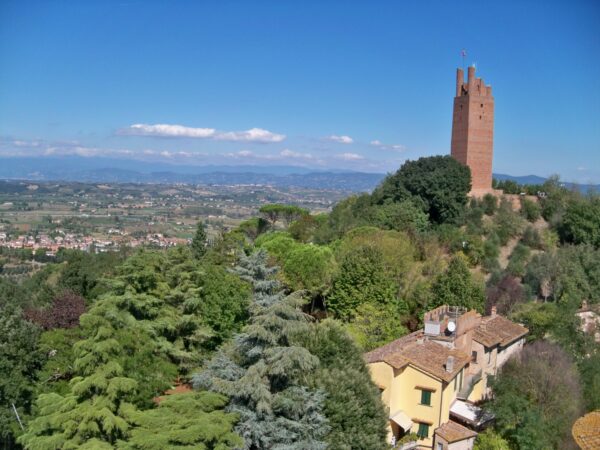
Rocca di Federico II in San Miniato – Credit: Alejandro Benito (VisitTuscany.com)
Terre di Pisa DOC and the Colline Pisane
The province of Pisa is sandwiched between Florence and Livorno, and the drive takes you through beautiful hill countrysides known as the Colline Pisane or Colli Pisani (Pisan Hills). While many visitors flock to the city of Pisa to gaze at the leaning tower, this region offers so much more to explore. The Strada del Vino del Colline Pisane is the official wine route of the region and offers different suggestions for touring by car, bicycle and even walking.
The Terre di Pisa DOC was established in 2011. Like many areas in this western region of Tuscany, one can find white and red wines blended from indigenous and international varieties. Its location is closer to the Tyrrhenian Sea which creates a mild, dry climate. Soils are mainly clay, limestone, and shale, which helps give the wines their appealing minerality.
In Terre di Pisa red wines dominate with both Terre di Pisa Sangiovese and Terre di Pisa Rosso designations. There is a smaller white region nearby called San Torpe DOC which produces mainly Vermentino, the star white grape of the region. While we have tasted Terre di Pisa wines at Anteprime Toscana, we had never visited a winery in this region until this trip.
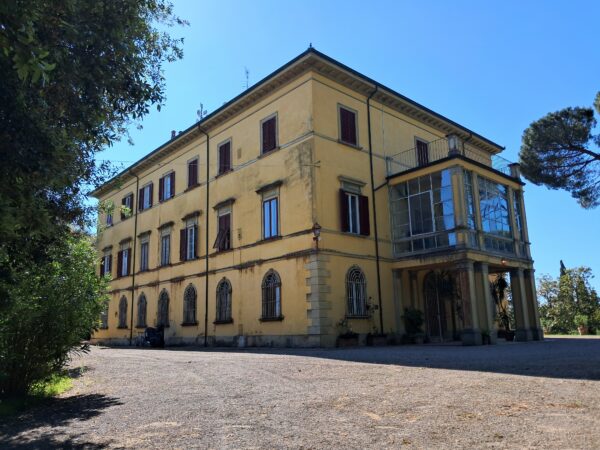
Villa Sole at Azienda Agricola Aldobrando degli Azzoni Avogadro
At Azienda Agricola Aldobrando degli Azzoni Avogadro we met with Aldobrando (Brando) degli Azzoni Avogado, third generation producer of a far older noble family who came from Northern Italy in the last century to make wine in this hidden gem of a region. The family also has estates in the Marche, Veneto, Sardinia, Tuscany, Trentino and Veneto. In the Marche, the family is a major cultivator of basil. A centerpiece of this wine estate of the 250-year-old house named, Villa Sole. It is located up a long drive in what feels like a very isolated area surrounded by woods and beautiful views. The family also has a fourteen-room inn close by called Le Solde. It is an ideal base for exploring the area.
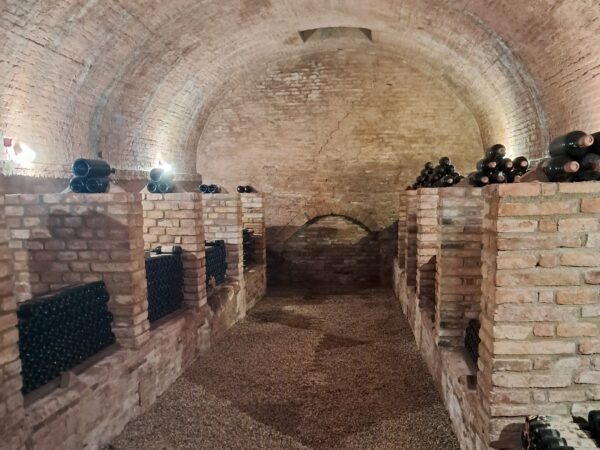
Historic cellars at Azienda Agricola Aldobrando degli Azzoni Avogadro
After touring the historic wine cellars, we sat down with Brando at Villa Sole for a talk and wine tasting. The wine are all organic; the main varieties cultivated include Sangiovese and Vermentino. Here is what we tasted:
Calyx 2026 IGT Toscana. This wine is a new label for this producer. It is a blend of two indigenous grapes: Mammolo and Foglio Tondo.
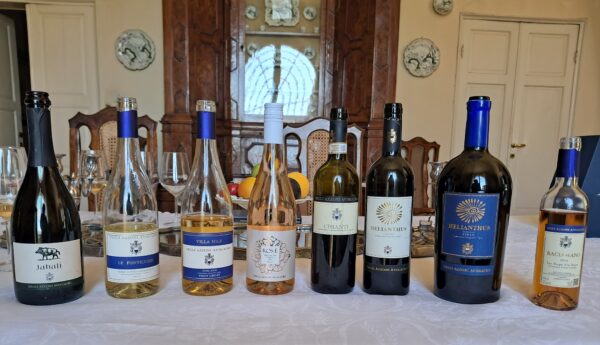
Jabali (wild boar in Spanish, Pronounced Hahbalee) sparkling rosé of 100% Sangiovese made in the Charmat method and with a color of dusky pink apricot and showing classic light wild strawberry “fragolina” notes on the palate.
Le Fontecchie Vermentino 2025. Softer style, light salinity with lemon crème and saltine crackers
Villa Sole Pinot Grigio Ramato 2024, 65-year-old vines, 12 hours skin contact. Still the creaminess, light savory notes Great with fish soup, cheese, white.
Chianti DOCG Rosso 2024: 85% Sangiovese, 10% Merlot, 5% Syrah. Lovely raspberry, strawberry and floral notes with touch of spice and a silky soft finish.
Helianthus 2021 IGT (name means Sunflower) 50% Sangiovese, 25% Syrah, 25% Merlot. Earthy with notes of blackberries, bark, tar, herbs (oregano). A full bodied red that is meant to age.
Helianthus 100% Syrah, 2023. Aged one year in barrique. Made only in magnum and only from select grapes grown in warmer years. Syrah loves hot weather and does well under stress. This wine shows notes of black plum, blackberry, black walnuts, portobello mushrooms, herbs, some mint. Silky and elegant. Like a Cote Rotie. 600 bottles made and the wine is presented in a special box.
Baciamano 2016, San Torpe DOC Vin Santo. Notes of honey, brioche, toasted almond, brown butter. Grape is Trebbiano Baciamoano means “kiss the hand.” Brando is the only producer to make this Vin Santo San Torpe DOP which wins top accolades everywhere. This is the wine we brought back in our suitcase.
Visit: Azienda Agricola Aldobrando degli Azzoni Avogadro
Information on Tuscan Wine and Food Trails in this region can be found at these websites:
Strada del Vino Colline Pisane | Home
Learn more about this region and others at The Connected Table Live.
Watch at The Connected Table TV on YouTube
Listen on Spotify