
The hilltop medieval walled city of San Gimignano with its many stone towers is one of the most popular destinations in Tuscany, and for good reason. There are the Michelin-rated restaurants, award-winning Gelateria Dondoli, and 360-views from the towers, all built before the renaissance. The surrounding countryside is home one of Italy’s most renowned white wines, Vernaccia di San Gimignano DOCG, frequently referred to as “Tuscany’s White Queen.”
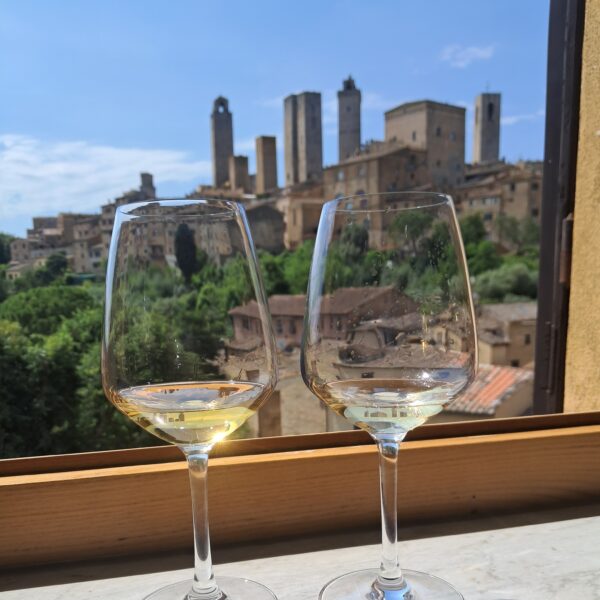
Tasting Vernaccia di San Gimignano DOCG wines at Regina Ribelle 2026
Crisp with a refreshing salinity blended with tropical and stone fruits, Vernaccia di San Gimignano is food friendly and ageable, and as we continue to learn, a wine of many styles and characteristics depending on how it’s made. Tropical fruits like pineapple and lychee, citrus notes, flintiness and minerality from the region’s fossil-laden clay and calcareous soils are all hallmarks. This region used to be covered by the sea and retains countless remnants of fossilized seashells, which help drive this wine’s identity.
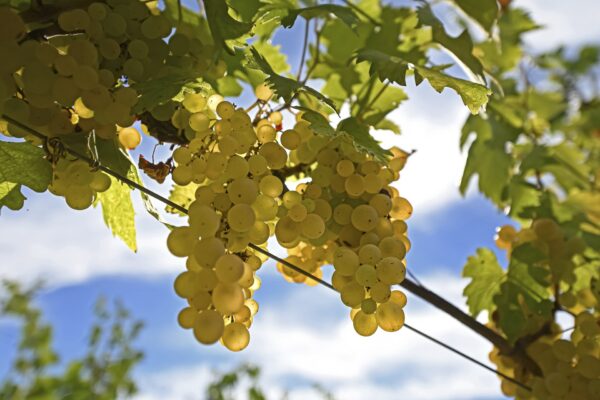
Vernaccia di San Gimignano clusters Photo: La Lastra
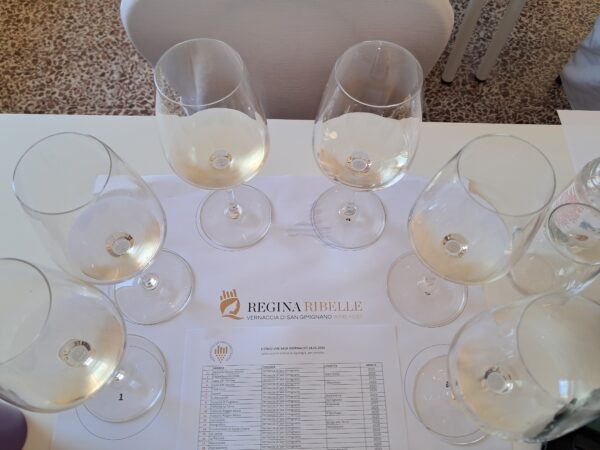
Each Spring in late May, the Consorzio Vernaccia di San Gimignano hosts the Regina Rebelle Wine Fest to celebrate this iconic wine. During the week leading up to the weekend-long festival, which is open to the public, we attended a preview for the global wine media and had the chance to taste more than 60 wines, both new and older vintages, at seated tastings and dinners where we spent time with producers and hear their stories and personal philosophies on winemaking. There were also seminars on Vernaccia di San Gimignano and its history in the area and guided tours of some of the museums and art galleries that dot the village.
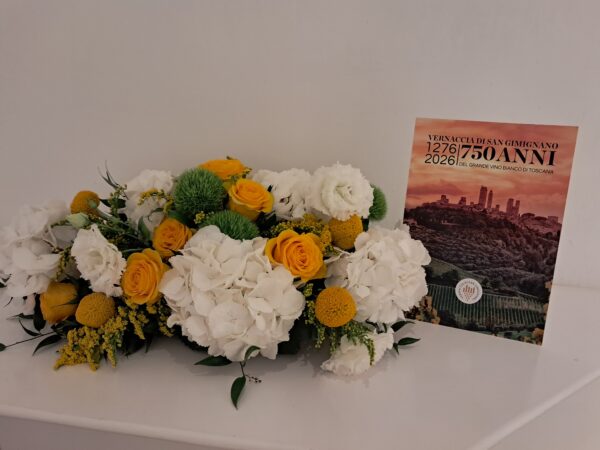
The year 2026 marks the 750th anniversary of Vernaccia di San Gimignano which has had both its historic highs and lows over the centuries based on changing wine consumption. During the 1930s, an effort to bring Vernaccia di San Gimignano back to prominence was initiated by Carlo Fregola, the Regent of the Ambulant Chair of Agriculture in Colle di Val d’Elsa. Convinced of its potential as a significant Tuscan wine, Fregola urged the region’s winegrowers to reinstate Vernaccia to a position of importance in their vineyards. While the Second World War resulted in many abandoned vineyards, enterprising vintners saw promise and acquired the land to build new wineries. We saw that in the wineries we visited during this recent trip in May 2026.
Most of the wineries in the region welcome visitors and offer tasting experiences. Here are a few with agritourisms, from a simple farmhouse to luxury apartments and villas to modern glamping.
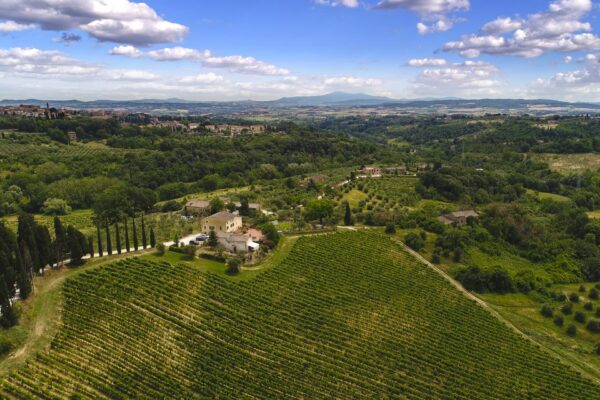
Aerial view of La Lastra Photo: La Lastra winery
Azienda Agricola La Lastra
Founded in 1984, La Lastra is a seven-hectare farm owned by Nadia Betti, her brother, Christian Betti and husband, Renato Spanu. They expanded in 2000 with Marciano, another small wine and olive estate and agritourism near Siena in the Colli Senesi DOC. Here, the couple also grows saffron which we learned is a historical and still-strong crop for cultivation around San Gimignano.
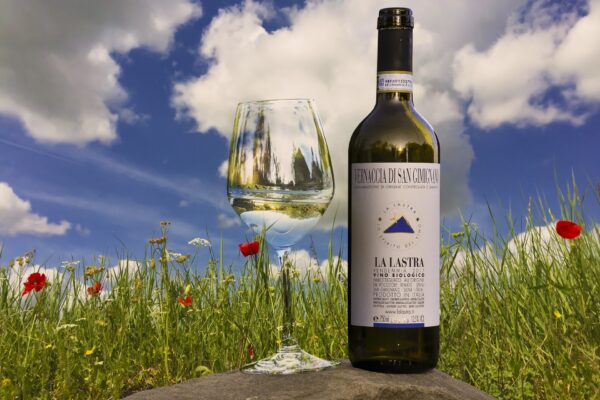
Wines we tasted included a number of Vernaccia and Vernaccia Riserva. With vintages including 2023, 2018 and riserva 2019 and 2015. The “normale” wines tend to be fermented only in stainless steel to help preserve their fruit flavors and acidity. However, the riservas tend to spend some time in oak and often have extended lees contact, helping them develop vanilla and spice characters and a softer creamier texture.
La Lastra offers several tasting experiences and has an agritourism. Visit: www.lalastra.it
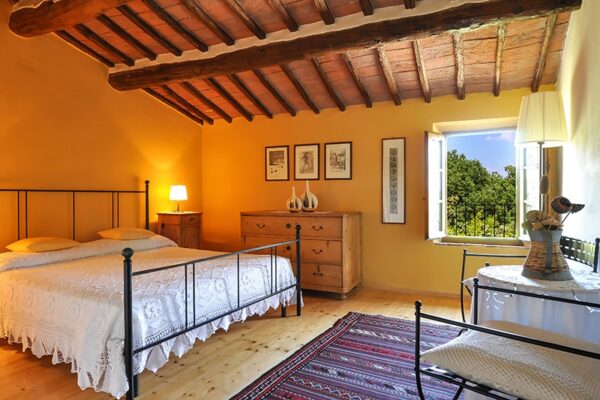
Room at La Lastra agritourism Photo: La Lastra winery
Azienda Agricola Signano
While at La Lastra, we also tasted through wines from Azienda Agricola Signano, a neighboring winery with a beautiful agritourism, Il Casolare di Buscciano. This winery was founded in 1961 and produces wines under their Signano and Poggiarelli labels. Signano produces both whites (Vernaccia) and reds (Colli Senesi DOC). All the wines are single vineyard.
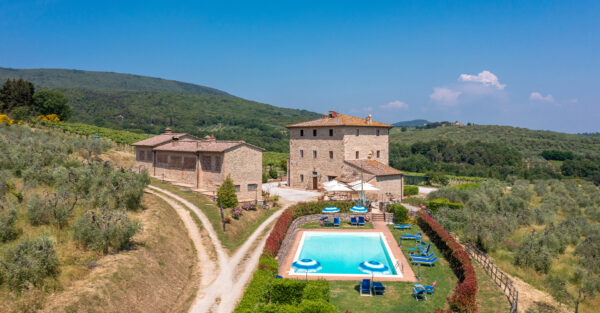
Casolare Di Bucciano is a sixteenth-century habitation, lovingly restored, and surrounded by nature, vineyards and olive groves
During our tasting, we compared Vernaccia vintages with those from La Lastra – for the most part – as an exercise in identifying traits and similarities in the wines from one year to another. Wines poured included Vernaccia 2023 from their Poggiarelli label and Signano Vernaccia Riserva 2019, and two much older vintages, a Signano Vernaccia 2003 and Riserva 2002, both of which, even though over 20 years old, still showed lovely notes of spice and dried fruit and retained good acidity – wonderful testament to Vernaccia’s ability to age for a long time if made to do so.
Visit this winery and agritourism: www.casolaredibucciano.eu
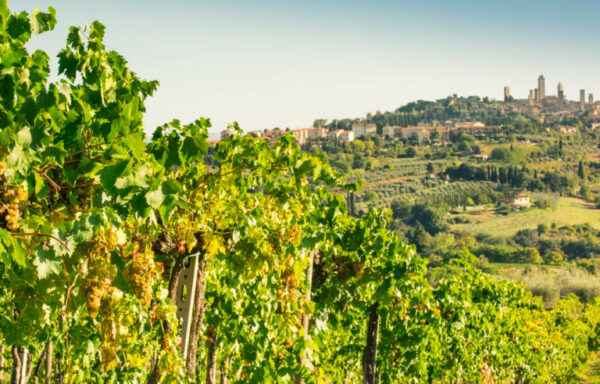
Vineyards at Azienda Agricola Signano with view of San Gimignano
Poderi Arcangelo Winery and Agritourism
Poderi Arcangelo is a stunning family-run winery and agritourism offering both glamping, and two farmhouses (poderi), each with swimming pools. The Mora family, Arcangelo’s owners, are originally from the Marche region and came to this area of Tuscany in the early 1900s to start their own farm. They purchased a small piece of land with a cottage and planted grapes. Over the years as surrounding land came available, the family added to their holdings and planted more Vernaccia and Sangiovese. Today, the estate comprises forty-eight hectares with twenty-four under vine. Wines are all organically made, and annual production is 60,000 bottles. The estate also has olive trees and beehives to make honey.
We had lunch with fourth generation family member Alberto Mora in the glass-enclosed terrace in the main farmhouse which dates to the eighteenth century. Beautifully restored it has a large kitchen and areas for dining and wine tastings.
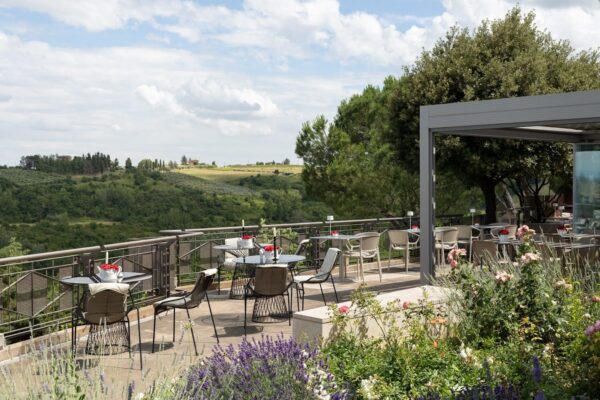
Dining terrace at Podere Arcangelo
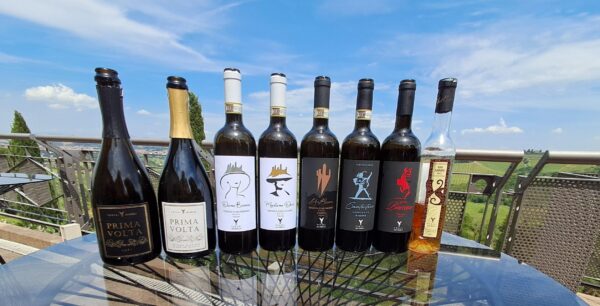
Wines we tasted included Vernaccia in both still and sparkling formats. Sparkling wines included the Prima Volta Brut Charmat NV and Metodo Classico NV. Still wines included the Dama Bianca and Madame Adore Bianco Select – a next-level Vernaccia with a tiny amount of Chardonnay added to the blend that adds depth and richness. Another Vernaccia, the Per Bruno, was aged one year in oak barrels and another year in bottle prior to release. We also tasted few lovely Sangiovese–based dry reds, and a beautiful Vin Santo Occhio di Pernice – a Vin Santo made from predominantly Sangiovese and blended with smaller part of the traditional blend of Trebbiano & Malvasia.
Poderi Arcangelo offers different tasting experiences, cooking classes and accommodations. Visit: www.poderiarcangelo.it
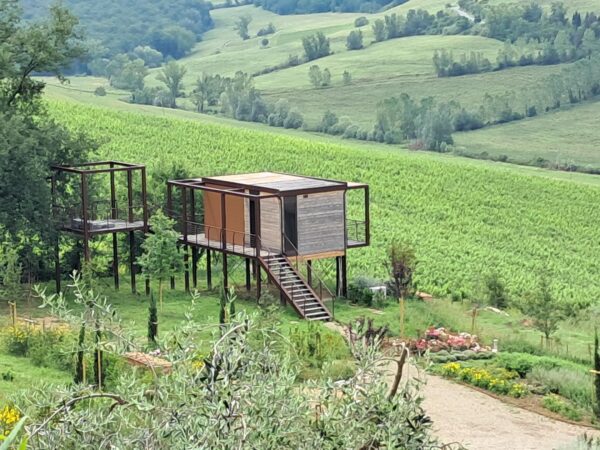
Stylish glamping at Poderi Arcangelo
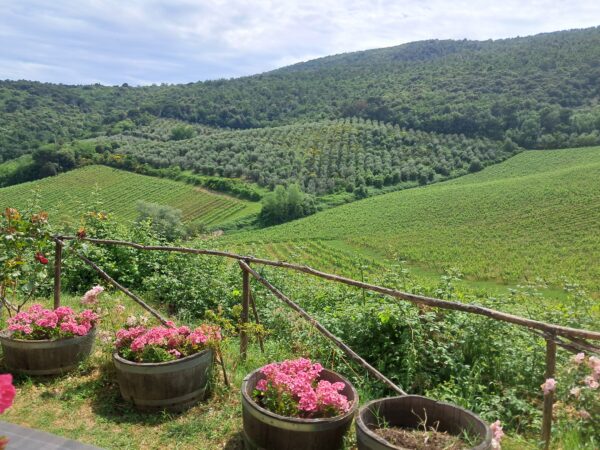
View of the vineyards at Fattoria di Fugnano
Fattoria di Fugnano
At Fattoria di Fugnano, Owner Laura Pensabene Dell’Aira and her team gave us a grand welcome lined up at the entrance to this storied family estate located near the village of Fugnano, whose original documents date it to 1254. The Fugnano community is located on along the Via Francigena, an ancient road that that led from Canterbury to the holy city of Rome during medieval times.
Like many areas in rural Italy, this farming village was abandoned after World War II. In 1963, Andrea Pensabene, a tomato farmer in Sicily, came to Fugnano, acquired land and started the rebuilding process. This included planting vineyards to grow grapes and make his own wines. His son, Laura’s father, was a lawyer who was against his daughter taking over the winery. Laura persisted, and her father finally acquiesced. In 2000 at the age of twenty-three, Laura assumed control of the estate to continue her grandfather’s legacy.
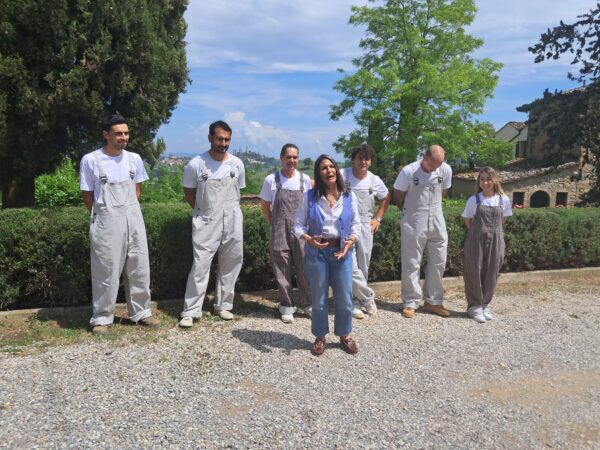
Owner Dell’Aira and her team welcome us to Fattoria di Fugnano.
Laura calls herself a “custodian of the land” and is passionate when she speaks about her family and wines. Laura’s ex-husband makes the wines. Her son, Andrea, is the viticulturalist; he gave us a tour of the vineyards. The estate has two hundred hectares with twenty-three under vine.
Wines we tasted included the main Fugnano Vernaccia line and the Donna Gina Vernaccia line, which is more of a riserva style, though not labeled as such. Vintages included Fugnano 2025, 2024, 2023, 2019, and Donna Gina 2023, 2021, 2020, 2019. We also tried a few of Fugnano’s reds, including their Chianti Colli Senesi Rosso, Toscana IGT Rosso, and the Legami: Fugnano’s Super Tuscan made from a blend of Cabernet Sauvignon, Merlo, and Syrah.
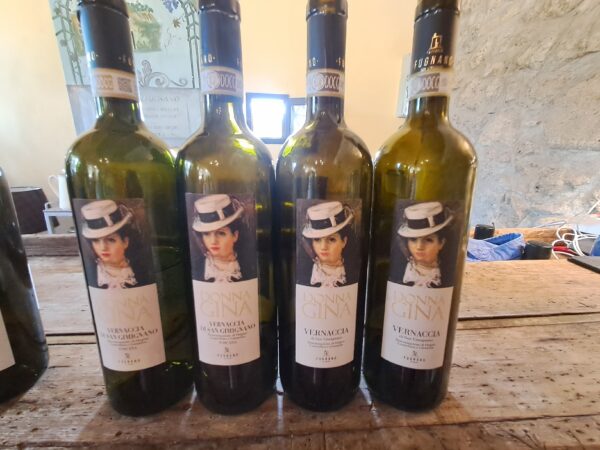
Fattoria di Fugnano Donna Gina wines
Fattoria di Fugnano offers different wine experiences and a few agritourism options. During our visit Laura served Sicilian gelato after our wine tasting. She is proud of both her Sicilian and her Tuscan heritage and her exuberance is delightful. Visit: www.fattoriadifugnano.com
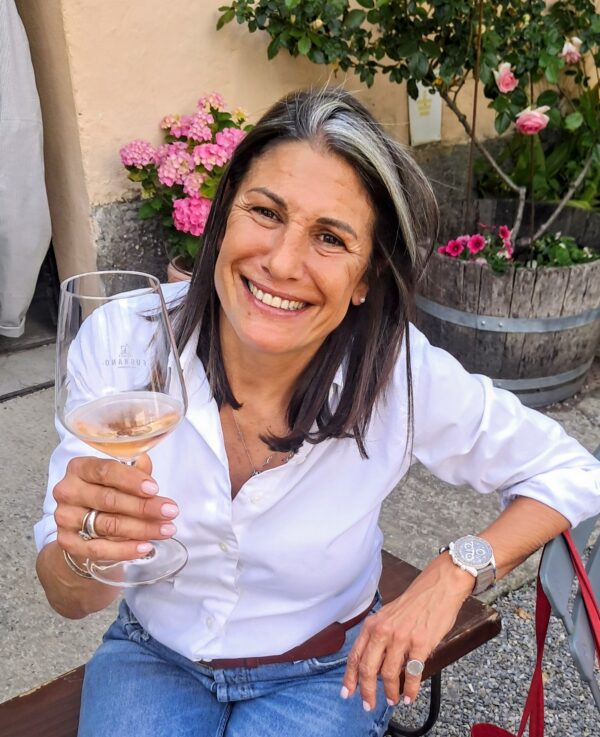
Laura Dell’Aira, proprietor, Fattoria di Fugnano
Our trip was arranged by the Consorzio del Vino Vernaccia di San Gimignano as part of the Regina Ribelle Wine Festival media preview. The festival is an annual event, usually held in late May, and open to the public. For more information, visit: Verifica dell’età – Consorzio del Vino Vernaccia di San Gimignano
Here is some helpful information for planning a trip to Tuscany and to San Gimignano:
Visit San Gimignano | Tourist Information
Regina Ribelle 2026 – Vernaccia di San Gimignano Wine Fest
Information on Tuscan Wine and Food Trails in this region can be found at these websites:
Watch this episode on The Connected Table Live to learn more:
Listen to this podcast on iHeart Radio, Spotify or the podcast channel of your choice.